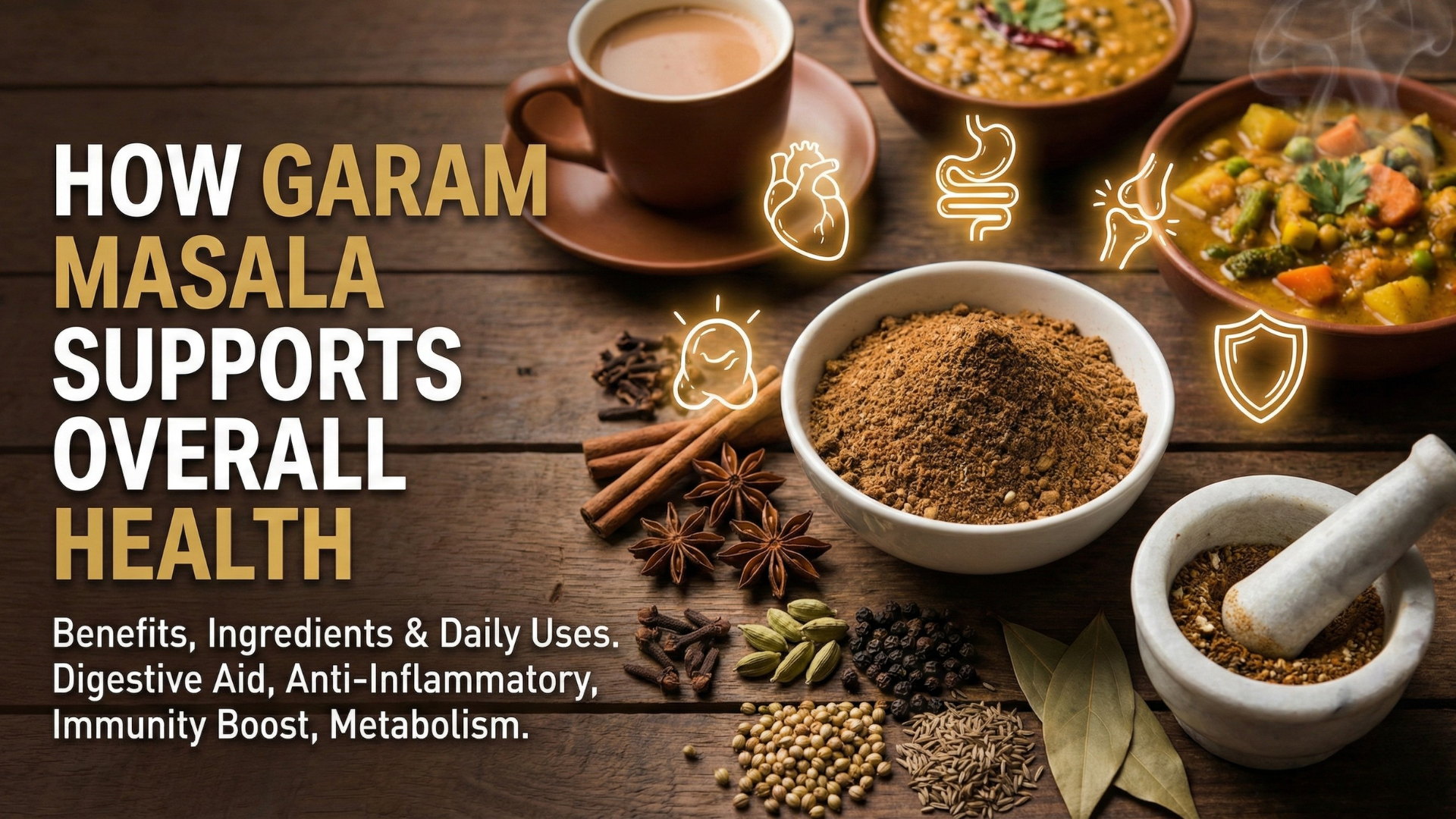
Garam masala is one of the most essential spice blends in Indian kitchens. Known for its warm aroma and rich flavor, this traditional spice mix does more than just enhance taste — it also offers impressive health benefits.
In this blog, we’ll explore how garam masala supports overall health, its key ingredients, nutritional benefits, and how you can include it in your daily diet.
What Is Garam Masala?
Garam masala is a traditional Indian spice blend made by combining various ground spices. The word “garam” means “warming,” referring to its ability to heat the body according to Ayurvedic principles.
While recipes vary by region, common ingredients include:
- Cinnamomum verum (Cinnamon)
- Elettaria cardamomum (Cardamom)
- Syzygium aromaticum (Clove)
- Cuminum cyminum (Cumin)
- Coriandrum sativum (Coriander)
- Piper nigrum (Black Pepper)
- Myristica fragrans (Nutmeg)
Each spice contributes unique medicinal properties, making garam masala a powerful combination for health.
Nutritional Value of Garam Masala
Although used in small quantities, garam masala contains:
- Antioxidants
- Essential oils
- Iron
- Fiber
- Anti-inflammatory compounds
Because it’s a blend of multiple spices, it delivers a range of micronutrients and bioactive compounds in every pinch.
How Garam Masala Supports Overall Health
1. Improves Digestion
Many spices in garam masala stimulate digestive enzymes and help reduce bloating, gas, and indigestion. Cumin and coriander are especially known for supporting gut health.
2. Boosts Metabolism
The warming spices like black pepper and cinnamon may help increase metabolic rate, supporting healthy weight management.
3. Rich in Antioxidants
Cloves and cinnamon are loaded with antioxidants that help combat oxidative stress and protect the body from cellular damage.
4. Supports Immunity
The antimicrobial and antibacterial properties of spices like clove and black pepper help strengthen the immune system.
5. Anti-Inflammatory Benefits
Several ingredients in garam masala contain natural anti-inflammatory compounds that may help reduce chronic inflammation.
6. Supports Heart Health
Cinnamon and cardamom have been linked to improved heart health by supporting healthy blood pressure and cholesterol levels.
7. Natural Detox Support
Spices in garam masala may help improve circulation and promote detoxification by enhancing digestion and metabolic function.
Ayurvedic Perspective on Garam Masala
In Ayurveda, warming spices are believed to:
- Improve Agni (digestive fire)
- Enhance nutrient absorption
- Balance Kapha and Vata doshas
- Support overall vitality
Because garam masala generates internal warmth, it is especially beneficial during colder seasons.
How to Use Garam Masala Daily
You can easily add garam masala to:
- Vegetable curries
- Dal and gravies
- Rice dishes
- Stir-fried vegetables
- Soups
- Marinades
For best results, add it towards the end of cooking to preserve its aroma and nutritional properties.
Choosing High-Quality Garam Masala
To get maximum health benefits:
- Choose blends with no added preservatives
- Look for freshly ground spices
- Ensure there are no artificial colors
- Store in an airtight container away from moisture
High-quality garam masala ensures better flavor and nutritional value.
Precautions
- Use in moderate amounts, as it is a warming spice blend.
- People with acid reflux should consume carefully.
- Always balance with other ingredients in meals.
Conclusion
Garam masala is more than just a flavorful spice mix — it is a blend of powerful medicinal spices that support digestion, immunity, metabolism, and overall health.
Adding a small amount of high-quality garam masala to your daily meals can enhance both taste and wellness naturally.